
BLATM
Contents
- Introduction 1
- Passage clearing 2
- Juxes 4
- Defensive technique 6
- Overlap defences 7
- Funneling 9
- Immo, Makantor, and Dancing Blades 11
- Bodyblock blockers 14
- Accessibility 15
- Openings 19
- Hard examples 23
Self-bodyblocking is when you’d like to have two allies occupy the same space. The impossibility of this leads to many rich tactics. The most well-known kind of self-bodyblocking is corner provoking:
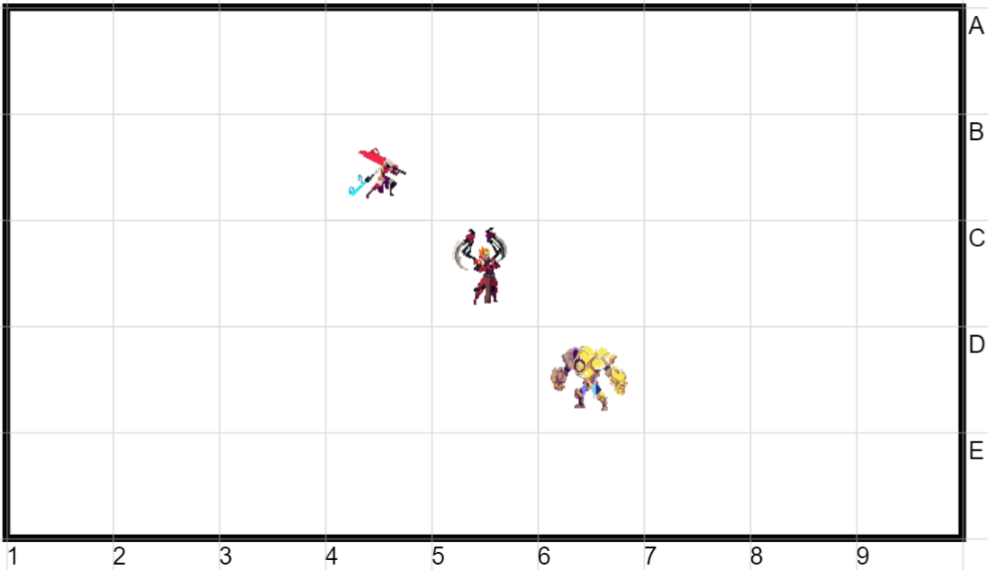
Here, the Songhai player would like to clear the Ironcliffe with their Hamon, but can’t because Kaleos occupies the space Hamon would like to move to. The result is that Hamon is rendered ineffective for the turn, reminiscent of stun.
Sections 2 through 8 of this article outline some common tactical themes, so that one can play with more awareness and leverage or mitigate these tactics more deliberately. Section 9 introduces the notion of accessibility in an effort to unify these tactical themes into a common framework. Section 10 presents a couple openings which depend critically on self-bodyblocking. Section 11 gives some examples of difficult boardstates which are complicated by self-bodyblocking.
Date: July 29, 2023.
The crux of the corner provoke in Fig. 1 is that Kaleos can’t move. Provoke is not the only reason a unit may not be able to move however. Much more common are situations like the following:
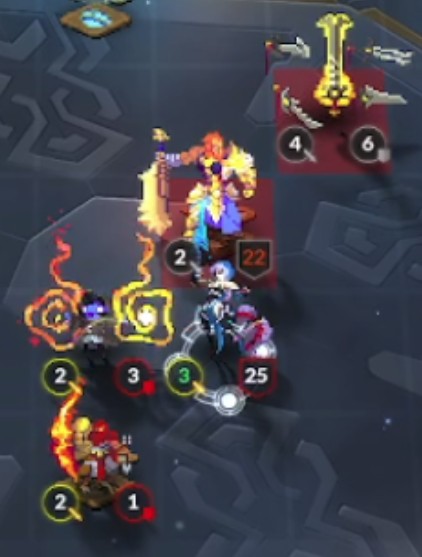
Figure 2
Ideally, the Dancing Blades would attack the Mystic, and Argeon would attack the Firespitter, but it is impossible to do both. This is because Argeon can’t move before the Mystic is cleared if he wants to attack the Firespitter. Thus, the Dancing Blades is self-bodyblocked in a way that parallels how it would be if the Mystic had provoke. I’ll call this theme passage clearing. Here are some other examples.
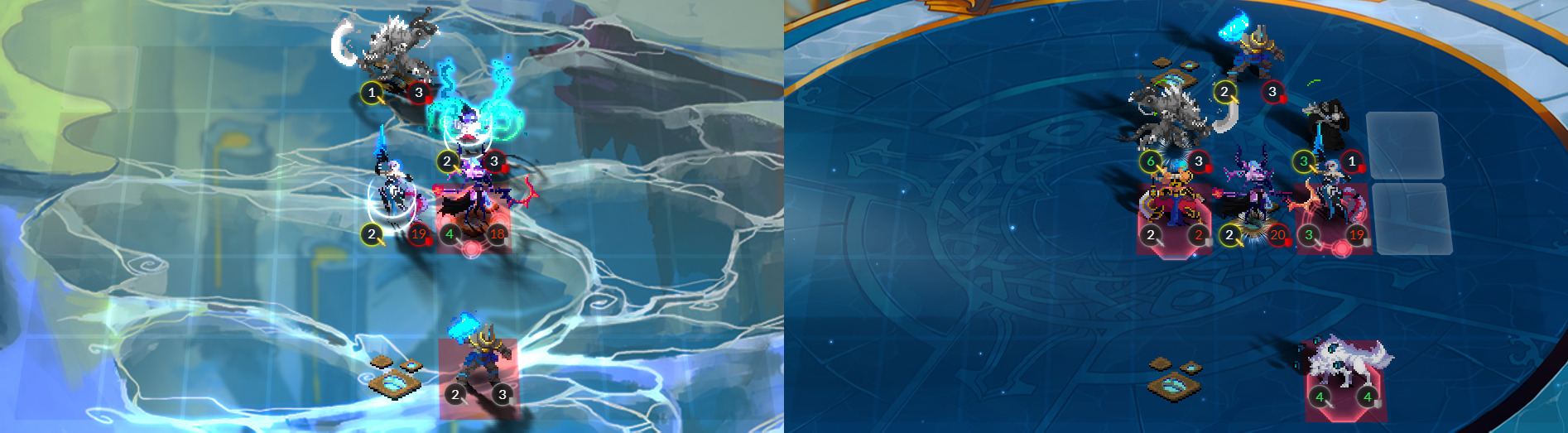
Figure 3 Figure 4

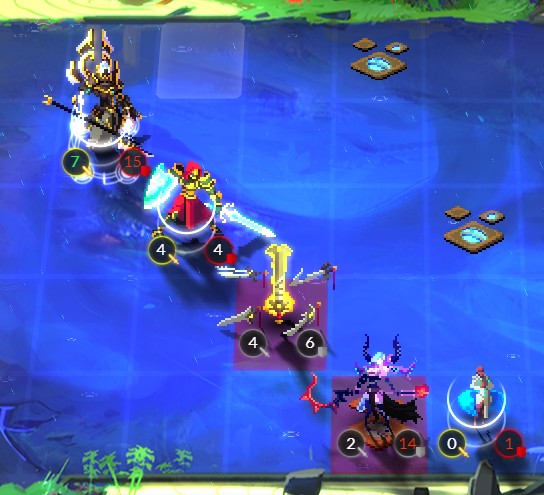
Figure 5. Dancing Blades in hand. Figure 6
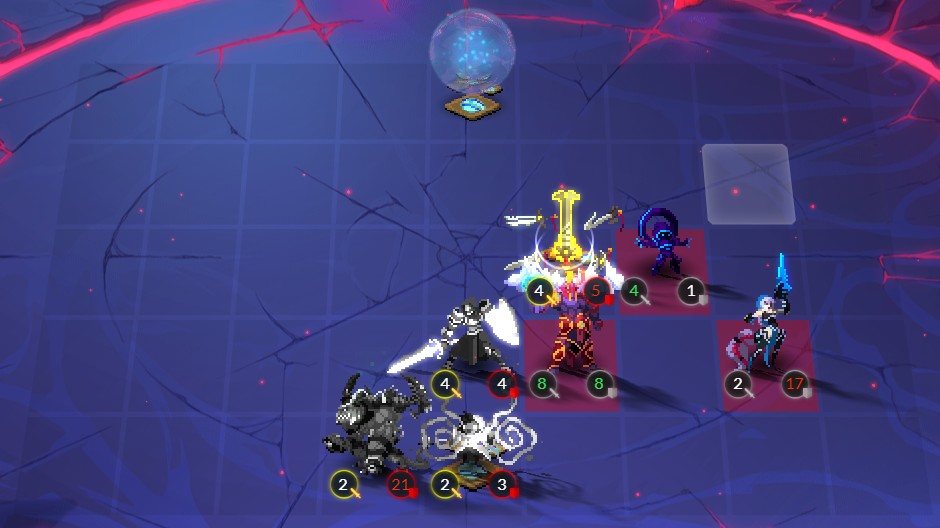
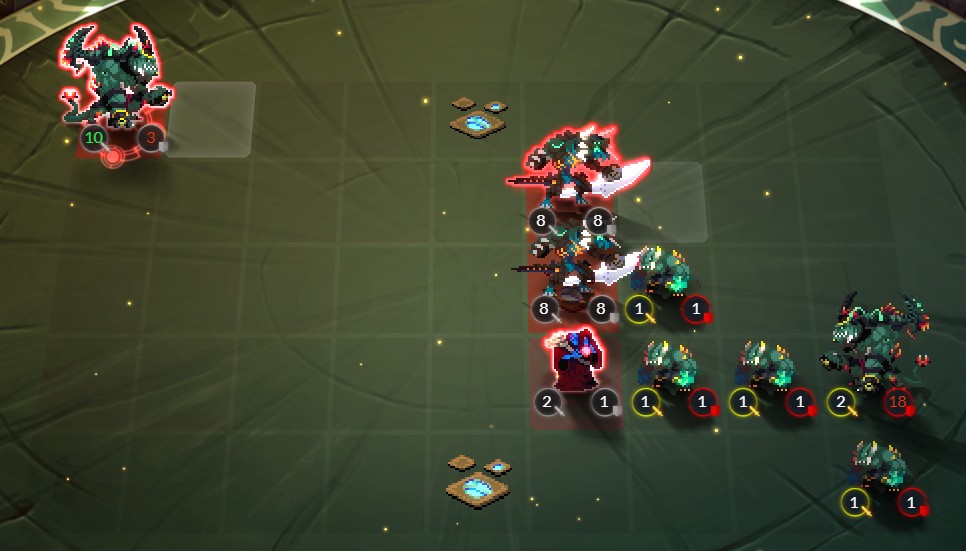
Figure 7. The High Hand would like to attack Vaath.
Figure 8. The Magma in the corner is Mechaz0r.
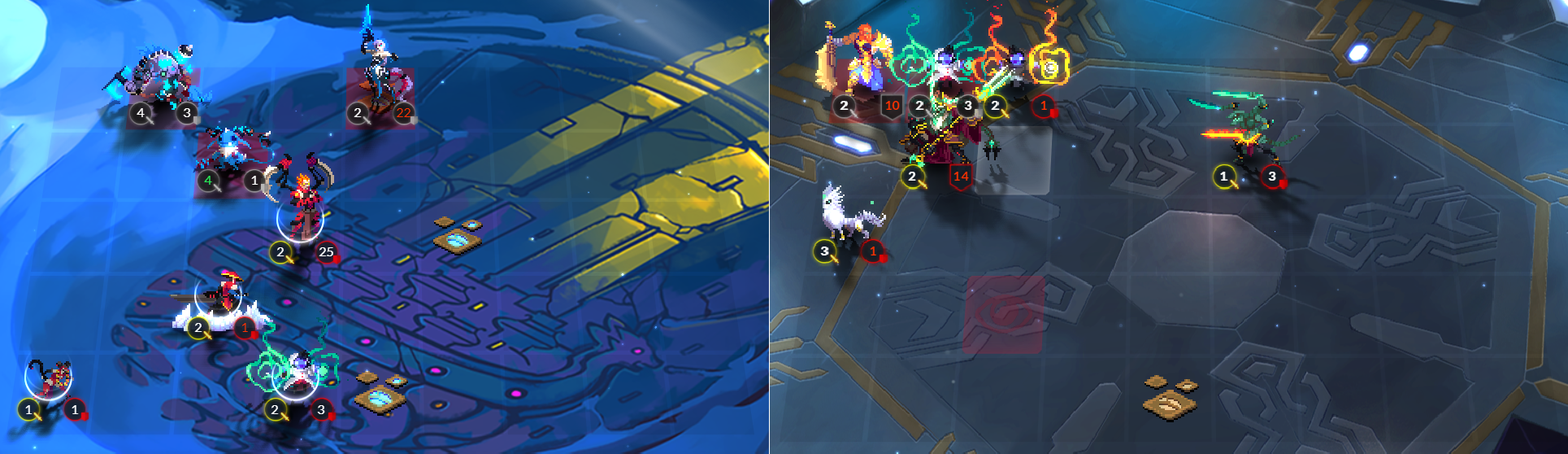
Figure 9 Figure 10
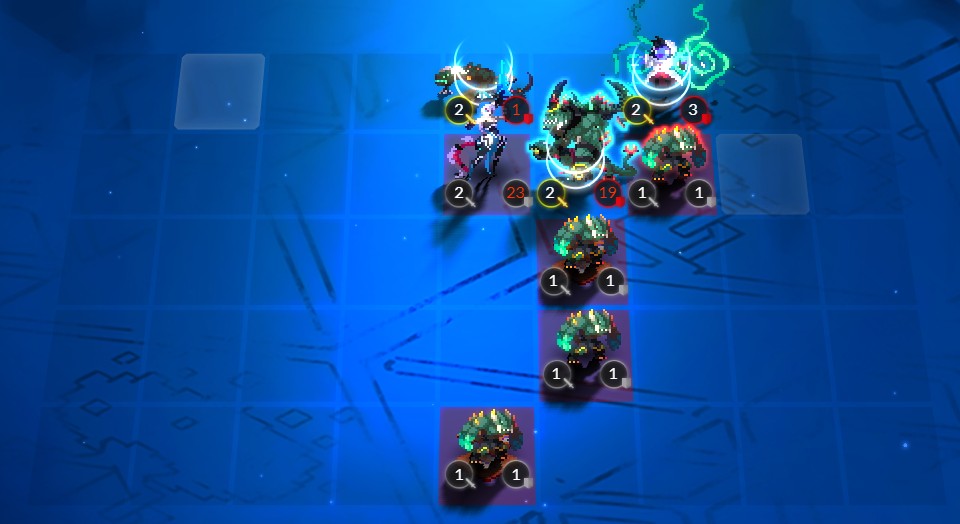
Figure 11
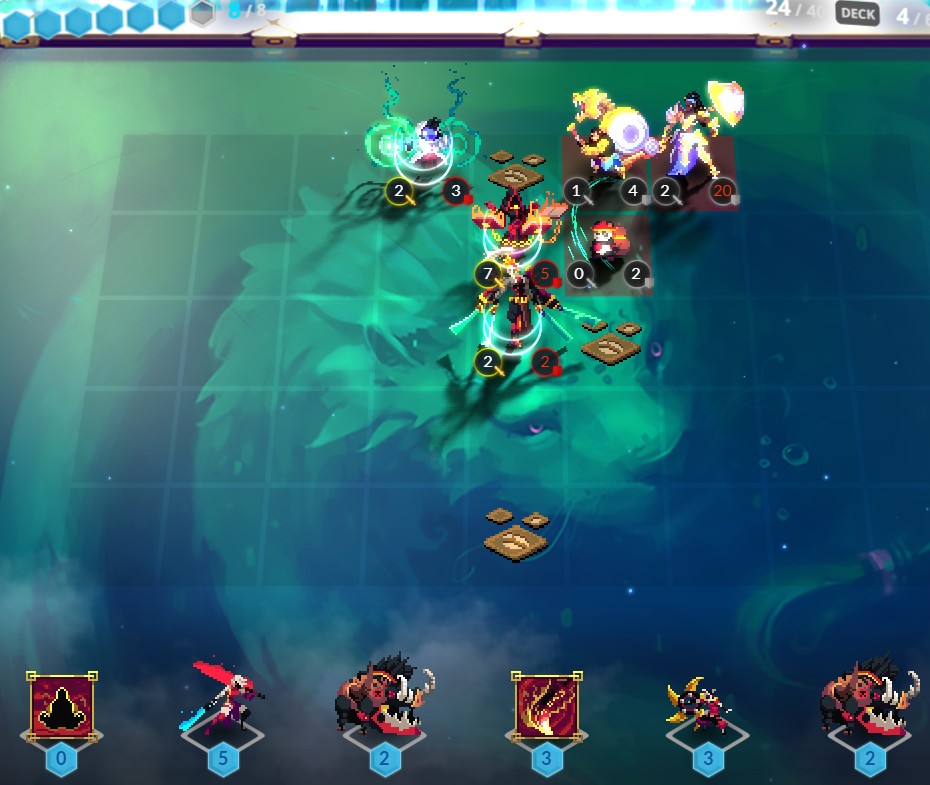
Figure 12
The examples above were all such that a first ally was bodyblocked by an enemy, and a second ally was bodyblocked by the first ally. A similar but distinct theme is when two allies instead bodyblock each other, and wish they could swap places with one another. I associate the qualifier Jux to these. Here is a clean example:
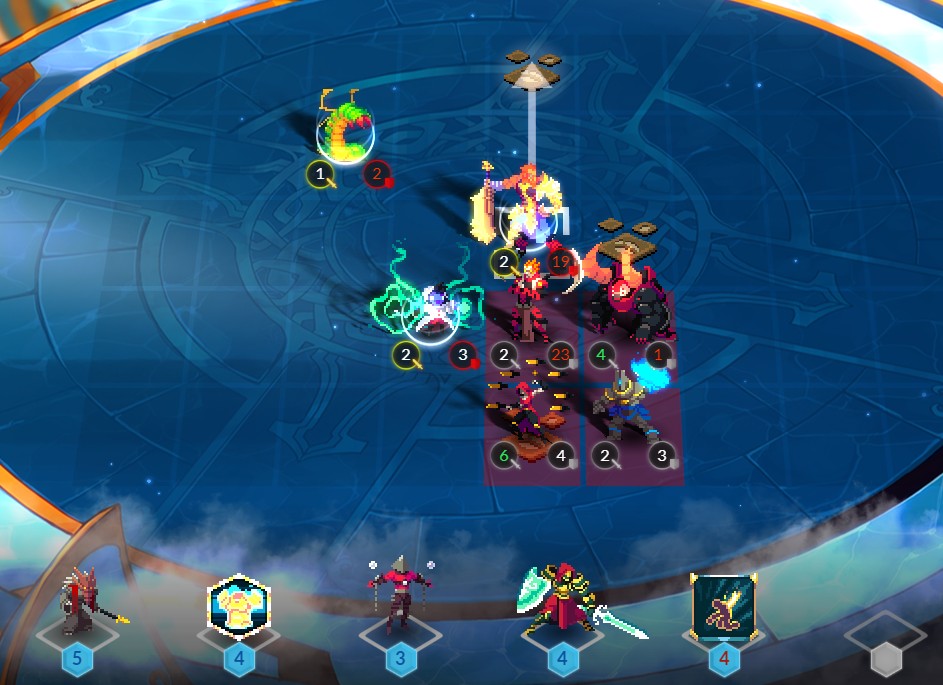
Figure 13
This sort of pattern can involve three allies as well:
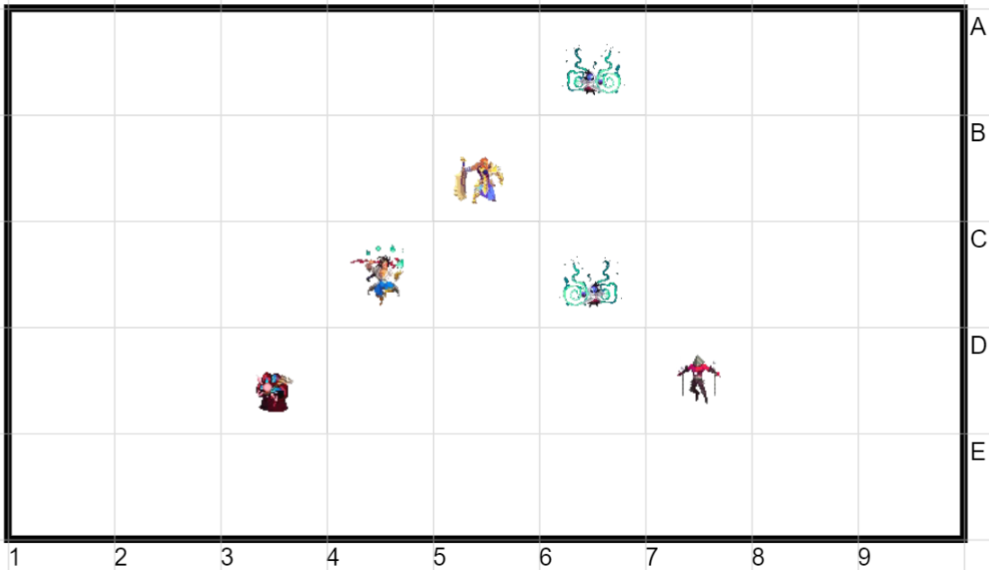
Figure 14
Here are some more examples.
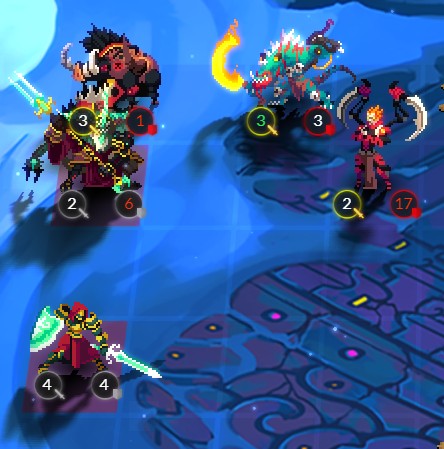
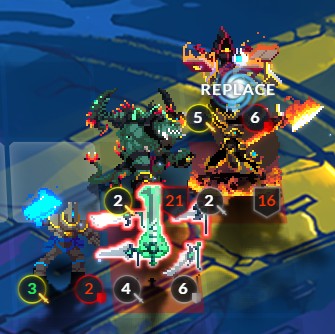
Figure 15 Figure 16
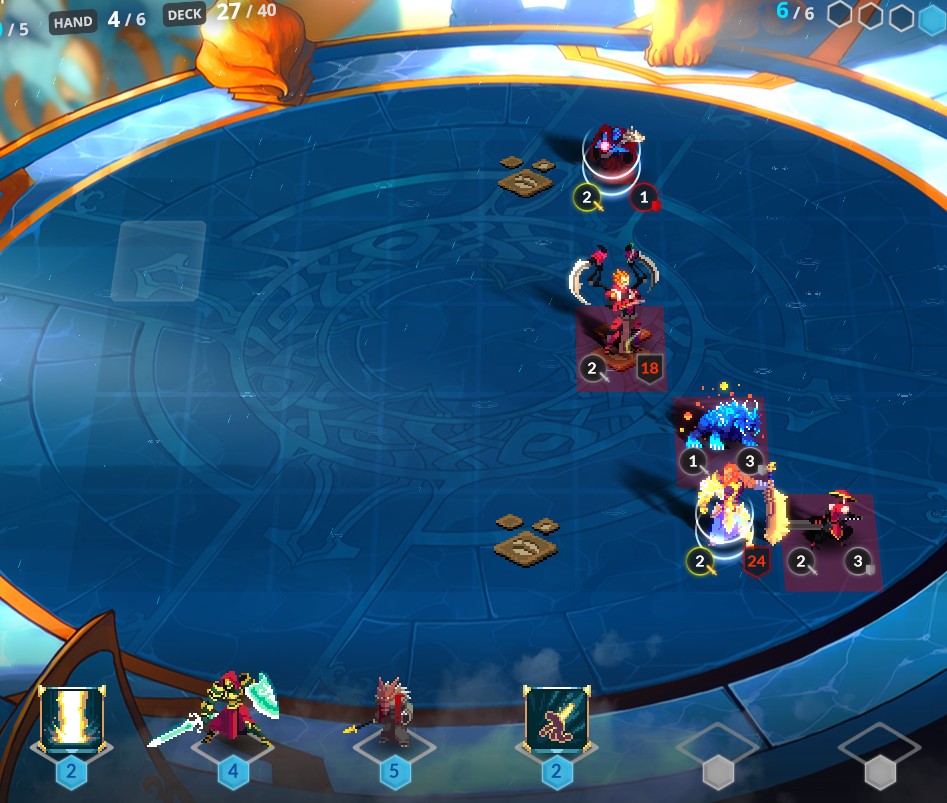
Figure 17. Puzzle: Prevent Kaleos attacking Argeon and Ghost Lynx attacking Bloodtear simultaneously.
In the examples above, it’s unclear whether or not the player disadvantaged by the phenomenon of self- blocking could have played better. Quite often, when one is the victim of a corner-provoke, most strong players would regard some decision leading up to that moment as a mistake. This is not universal across all self- bodyblocking motifs. There are some patterns which, in practice, seem difficult to avoid and are simply good defensive technique. Aspiring competitive players are behooved to familiarize themselves with common themes of this sort.
Here is a Jux self-bodyblock pattern which is often leveraged for defensive purposes unilaterally.
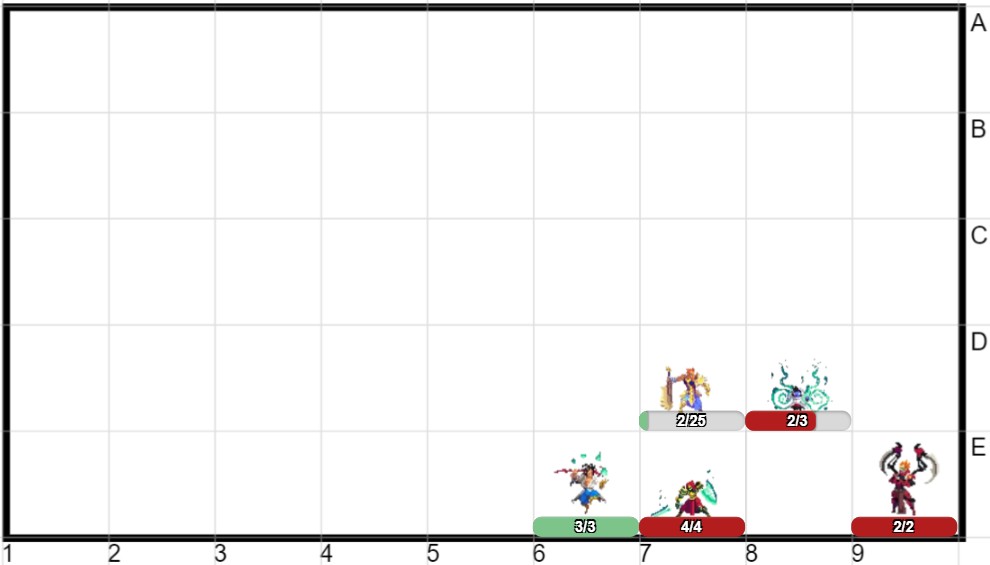
Figure 18
In dangerous late game situations where playing around lethal is a priority, one frequently positions allied minions in a way that limits, through self-bodyblocking, the number of enemies that can attack the allied general, often while hiding in a corner or on the edge of the board.
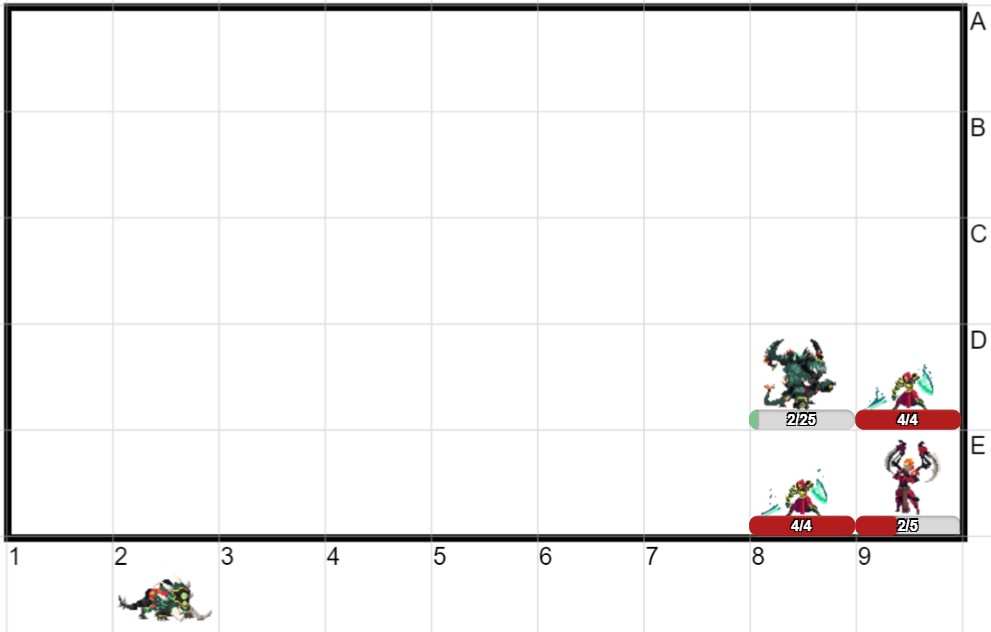
Figure 19
Here are two more examples.
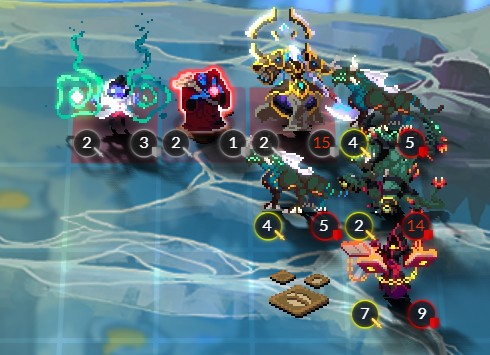
Figure 20. Vet’s out of hand burst is 1 damage per mana.
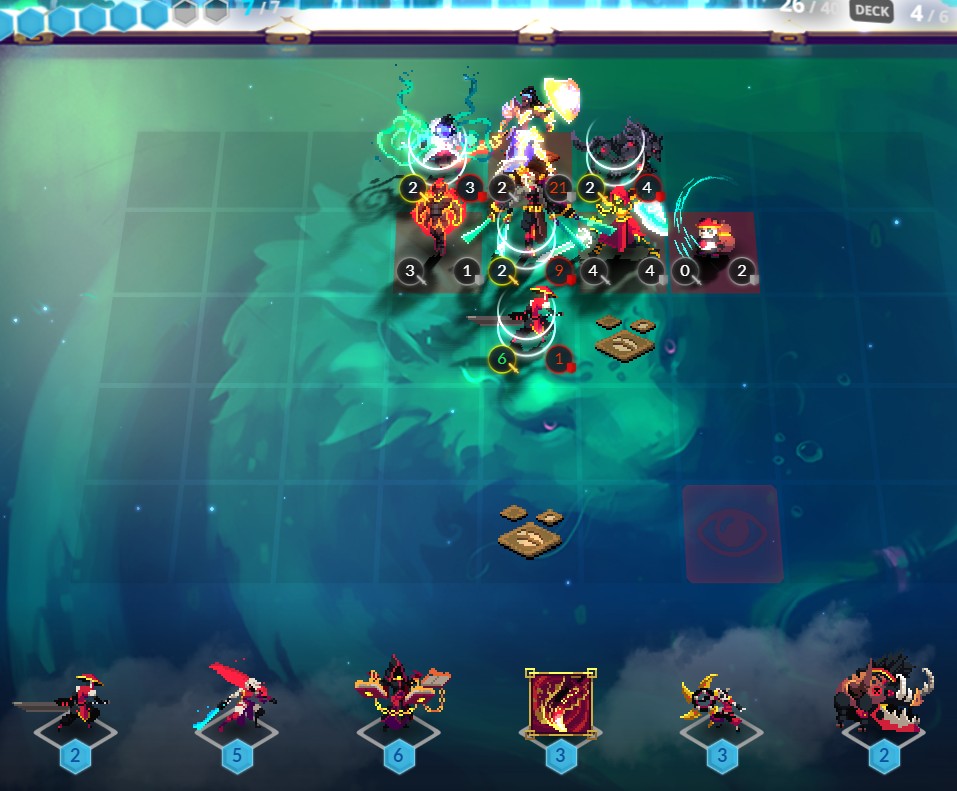
Figure 21. Puzzle: Find 20 damage.
The following figure exemplifies one of the more common, more useful, and less obvious defensive uses of self-bodyblocking:
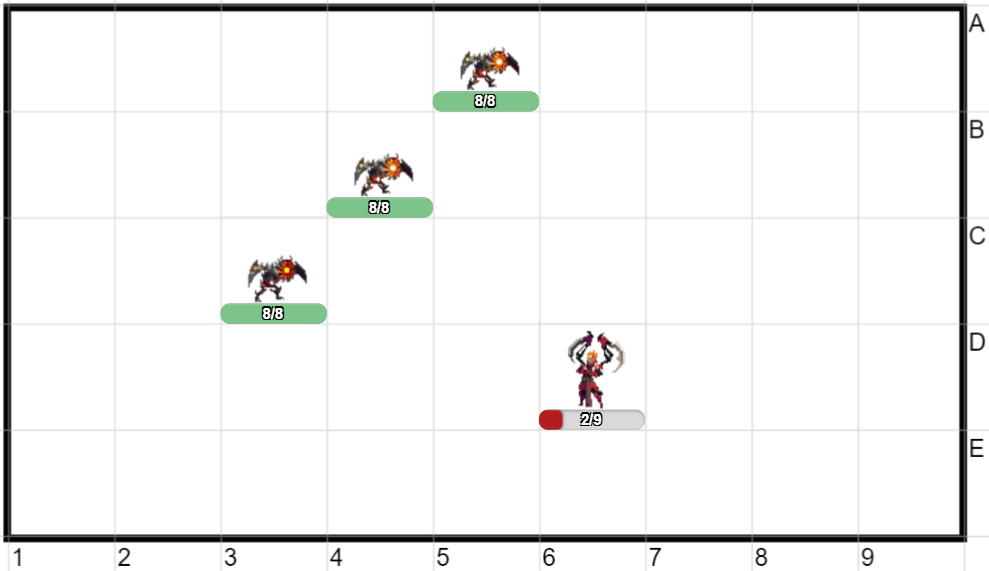
Figure 22
I’ll refer to these sorts of situations as overlap defences. It can be used both to mitigate face damage or to protect your minions.
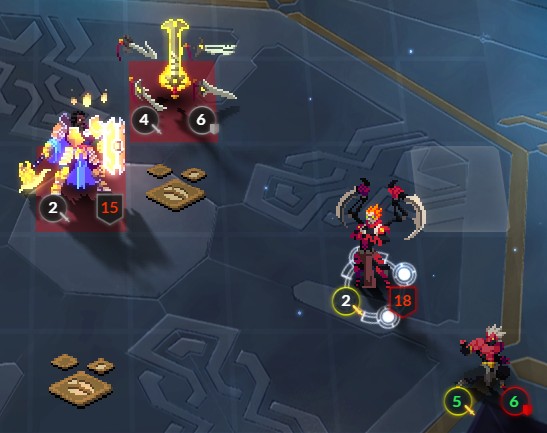
Figure 23. Preserving Bloodrage Mask.
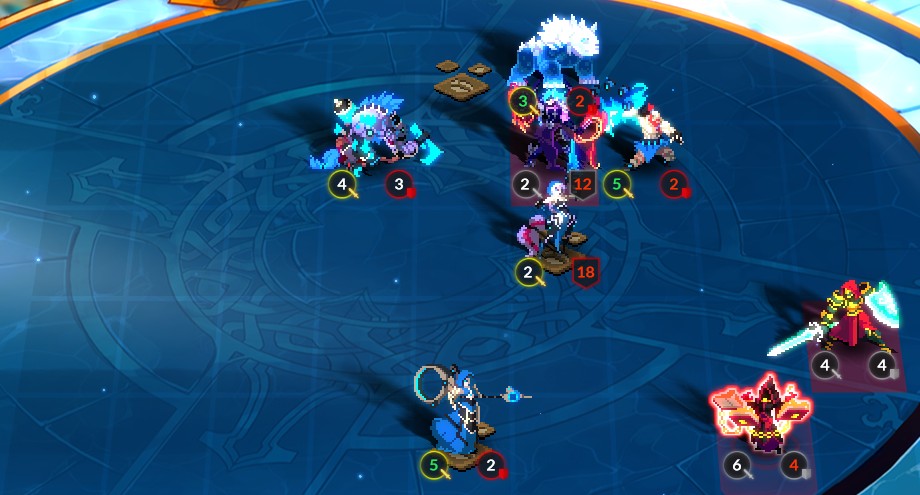
Figure 24. Playing around Revenant.
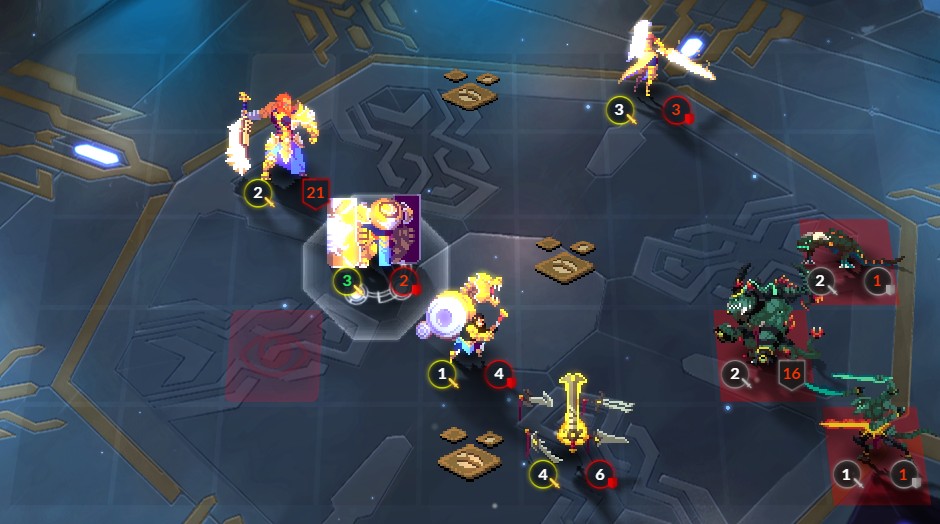
Figure 25. Sunriser not clearable on board.
One can sometimes position in ways which creates a self-bodyblocking motif reminiscent of overlap defences.
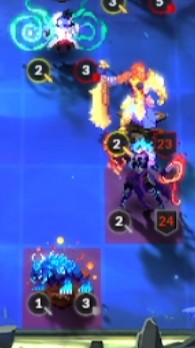
Figure 26
I’ll call this funneling. As with overlap defences, these can be used to avoid bad trades or to avoid lethal threats.
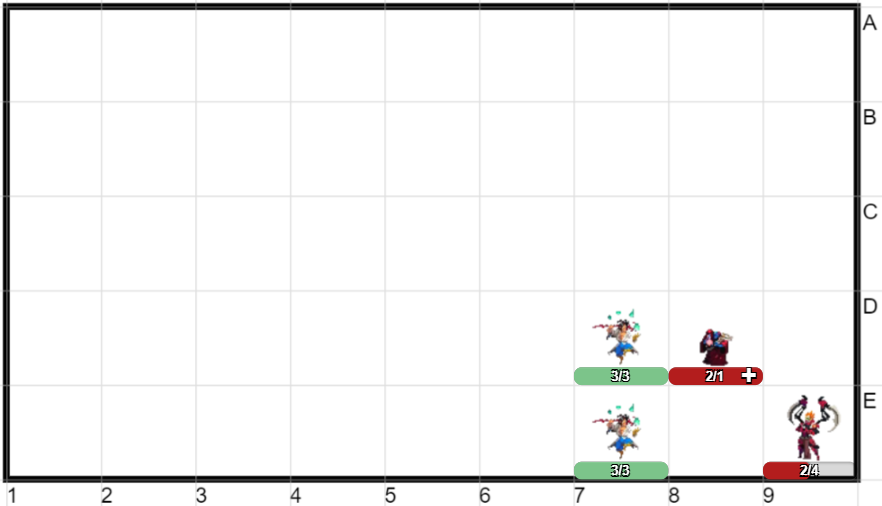
Figure 27
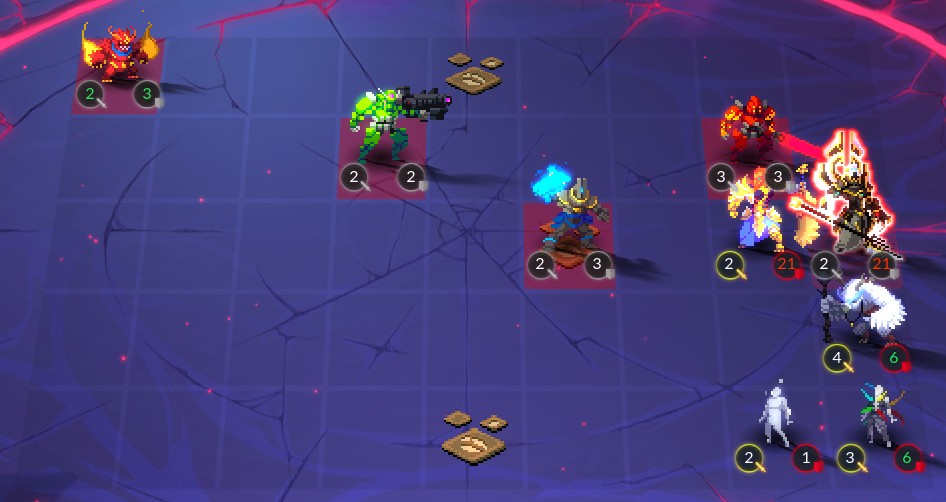
Figure 28
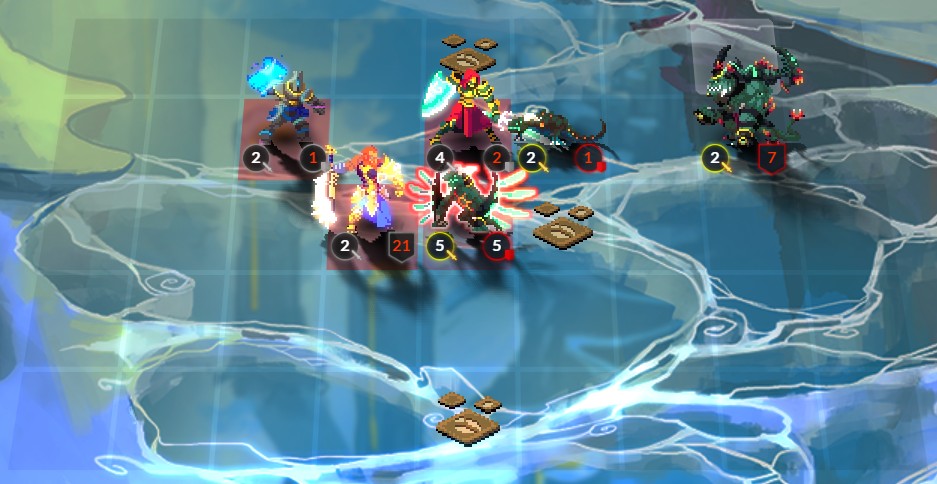
Figure 29
This theme arises particularly frequently with Walls.
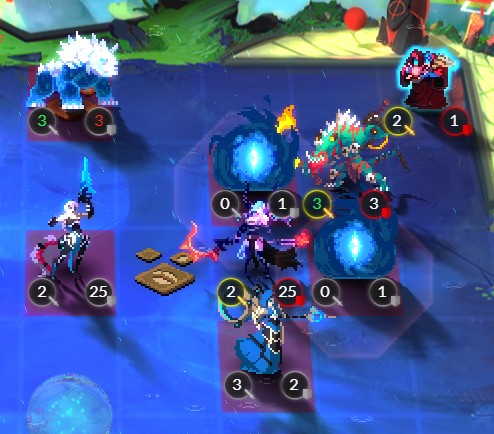
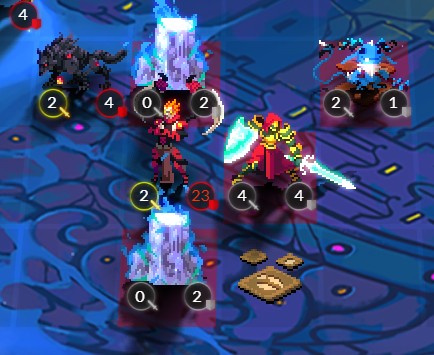
Figure 30 Figure 31
Dancing Blades funneling
The following positioning for playing around Dancing Blades is effectively a specific type of funneling.
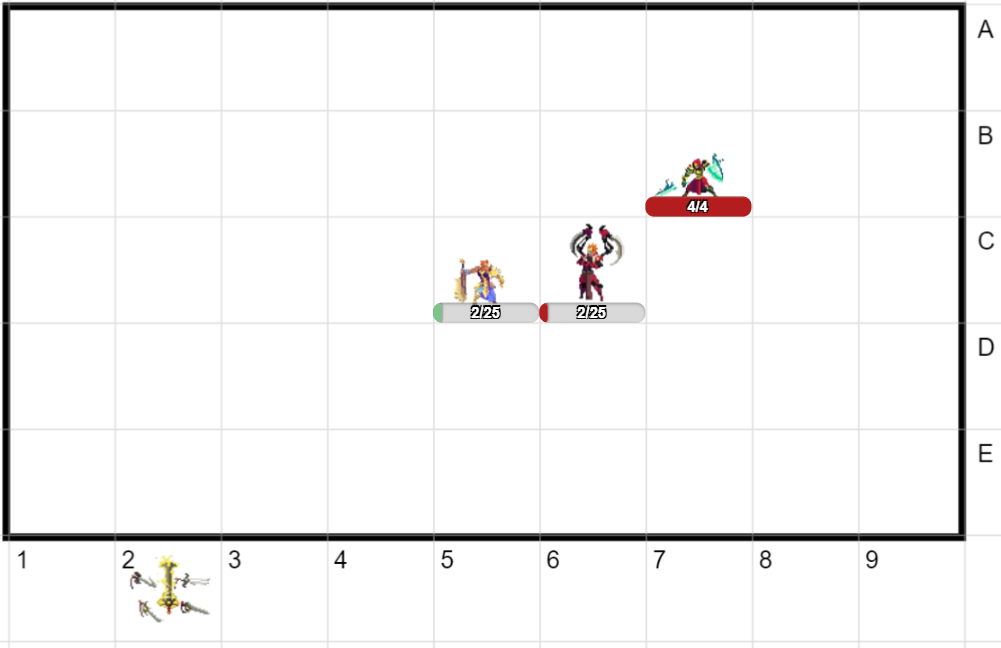
Figure 32
Here is essentially the same thing, but with Makantor.
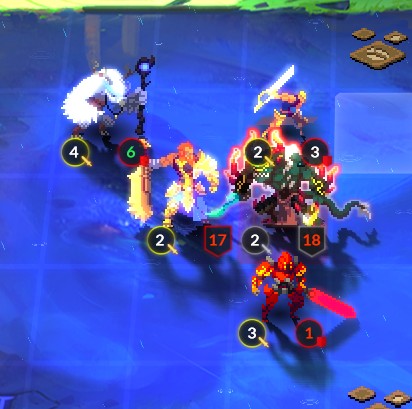
Figure 33
The Jay box
The following gamestate, arising in a match between Jay and Kolos in winner’s semis of the high-profile tournament King of the Beta in late March 2016, is easily the splashiest, most bombastic example of self- bodyblocking I know.

Figure 34. https://www.twitch.tv/duelysttournaments
Jay wrote about it here: https://www.reddit.com/r/duelyst/comments/4bbj7n/thinking_outside_of_ the_box_with_j/. Note that the above is simultaneously a jux defence.
As Immo and Makantor are both ubiquitous and positionally exacting, patterns of the sort above are sur- prisingly common. Here is a gamestate from a grand finals match in November 2022 which contains the same motif.

Figure 35. https://www.twitch.tv/f8_gg
In fact, the Lyonar player has lethal here (which is instructive to find), but this was missed in the match. This game was double tournament point for the Lyonar player, and, after this missed lethal, the Vanar opponent went on to themselves win the tournament!
One can observe the same motif with other cards, like Naga or Sword Inner Focus.

Figure 36
Summoning
Similar to but distinct from the situations above are instances where one would like to play Dancing Blades, Makantor, or a minion to Immo where an ally currently is, while other factors constrain the ally from moving.


Figure 37 Figure 38


Figure 39 Figure 40


Fig. 41 highlights that, when playing walls, usually the two most valuable targets should be put diagonally across from one another in situations like these.
One particularly dangerous class of self-bodyblocks are what I’ll call bodyblock blockers. These are situations where a player cannot effectively bodyblock against their opponent because of self-bodyblocking.

The most salient bodyblock blockers are ones which leave one’s general exposed, but they can also arise in the course of trying to protect an allied minion from on board trades.


Figure 44 Figure 45


Figure 46. Ideally, Glacial Elemental would move to A3, and Faie to B4 to bodyblock for it.
Figure 47. Vaath can’t bodyblock for the Archon.
I try to unify the self-bodyblocking themes above using a notion of accessibility. Typically, one can imagine that, on a given turn, each allied unit has a “task” they’d like to complete, and it’d be ideal if every ally could complete their task. Examples of tasks, in this sense, could be a 3/3 attacking a 2/3, or the general retreating to safety, or one unit bodyblocking for another. Each unit’s task can be accomplished in only a limited number of ways, and, in particular, from a limited number of spaces. To me, accessibility is the concept relating to which spaces a task can be accomplished from.
For example, consider the following boardstate.

Figure 48
Argeon would like to retreat to safety from the Hamon, with the Pando bodyblocking. There are two ways to do this: Argeon could move to C3 and Pando to D4, or Argeon could move to A5 and Pando to B6. However, in the following similar boardstate,

Figure 49
the space A5 is “not accessible” to Argeon, and there is only one way for allies to all accomplish their tasks, instead of two. If all units were shifted three spaces to the left,

Figure 50
then the Lyonar player cannot accomplish their tasks. Argeon can’t access B1 until the Pando has moved, and vice versa for the Pando bodyblocking on C2. The above is an instance of self-bodyblocking that I called a bodyblock blocker above.
Reasoning as with the example above leads me to view self-bodyblocking as arising from situations where accessibility is limited in some way. Self-bodyblocks are more common near edges or corners of the board, because those edges and corners inherently limit accessibility. Self-bodyblocks are more common with cards like Dancing Blades, Immo, and Makantor, because tasks involving those cards can only be accomplished from very specific spaces.
To mitigate an opponent’s ability to leverage self-bodyblocking against me, one heuristic I find helpful is to try to position such that my units can accomplish the tasks I anticipate assigning them from as many spaces as possible, i.e. maximizing accessibility. In Fig. 43, there was in fact no reason to play the minion that got Onyx Bear Seal’d on E1; E2 would have been just as safe. Strong players already know intuitively that, in some vague and general sense, they can get into trouble more easily when near edges or corners of the board.
Departing momentarily from the topic of self-bodyblocking, here are two positional motifs which I have an easier time generalizing when considered in conjunction with the notion of accessibility.
First, one common way to position a minion threateningly is as such:

When an ally is two spaces away from an enemy in any orthogonal direction, there is only one space the ally can retreat to to not be in range of the enemy, two spaces directly away. Given a visually spacious boardstate, it is perhaps not immediately obvious nor intuitively clear a priori that despite the preexisting gap between the two units, there is only one safe space to retreat to. From the perspective of accessibility, this is a precarious situation. If accessibility to the unique retreat space is denied (e.g. as in Fig. 51, where the retreat space is inaccessible by virtue of not existing), then the task of retreating will be impossible to accomplish.


Figure 52. Snowchaser freshly summoned.
Figure 53. If Kaido backstabs, Reva gets hit by Rejuv.

Figure 54
Second, one often wants to position their units such that there is considerable distance between them, for example to play around Makantor or Juxtaposition. It is possible to play a minion such that Makantor will only damage one unit if the general starts the turn on E3, but not on E2. In the following boardstate, it is impossible to play around Jux, whereas it would be possible if both allies started the turn one row higher.

Figure 55
Here are some examples of self-bodyblocking which I find easier to parse through the lens of accessibility, as opposed to a characterization as an instance of any particular theme.


Figure 56 Figure 57


Figure 58 Figure 59. From Zohan.


Figure 60 Figure 61. From Smarty.
 The last major topic that I’d like to touch on is that of openings. The soundness of certain openings can depend critically on specific self-bodyblock setups. In this I see a parallel with chess openings that depend critically on specific tactics. For example (that readers with no interest in chess are free to skip), on move 4 of the Berlin defence main line, white castles, and superficially it may appear that the e4 pawn is hanging. If it were actually hanging, this reputable opening would instead be regarded as unplayable, but after 4…Nxe4 both 5. d4 and 5. Re1 quickly recover the pawn.
Figure 62
p2t1: Ramp threat

In the figure above, the Healing Mystic threatens to walk onto the top mana tile next turn, allowing player 2 to play a 5 drop. Player 2’s positioning creates an overlap defence, preventing player 1 from clearing the Mystic
on board. If it were not for this self-bodyblock, this opening would be significantly weaker than alternatives and without merit, but as is it is quite effective at pressuring player 1 if player 2’s threat is sufficiently credible. The placement of the Mystic on B6 and the Windblade on C6 and not vice-versa is crucial for several reasons.
-
-
- If the positions of these two minions were swapped, then this would not in fact be an overlap defence, and the opening choice as a whole would be unjustifiable.
- It would allow the Mystic, now hypothetically on C6, to be cleared efficiently on board.
- As a matter of principle, it is wise to distribute incentives to clear minions as evenly as possible. In Fig. 63, player 1 is incentivized to clear the Mystic (with e.g. a Phoenix Fire or Mask of Shadows) because it prevents player 2 from ramping to 5, and player 1 is incentivized to clear the Windblade because it is the more powerful standalone unit. If instead the Windblade were on B6, then player 1 could have their cake and eat it too.
-
The p2t1 Ramp threat opening can also be played with a lone Fenrir, a lone Jaxi, a lone Young Silithar, or even a lone Mystic, but these are less common, since in very few matchups is it the case that player 2 has a credible threat of playing a dangerous 5 drop while additionally player 1 is playing a deck with few ways to efficiently clear player 2’s B6 minion.
p2t2: Ramp blocker

In the above, player 2’s Mystic creates a passage clearing self-bodyblock that prevents p1t3 from ramping to 5 mana. This situation is quite common, because the opening it is a variation in, p1t1 diagonal p1t2 take the bottom mana tile, is very common.
One variation which features a double passage clearing self-bodyblock is when, for example, p1t2 plays a Hailstone Golem on D6 instead of equipping a Regalia as in Fig. 64. Playing the Golem on D5 would avoid the Ramp blocker line, but leaves the un-zealed Windblade vulnerable to an attack from player 2’s general. My experience is that players place their p1t2 minion on D6 instead of D5 and play into the Ramp blocker much more often than they should.
Here are two more examples of the underlying ubiquitous opening motif.

Figure 65

Figure 66. https://www.twitch.tv/duelystcalvin
p1t2: Middle opening — Double 2 vs. Turtle

Figure 67
Don’t turtle vs. middle.
p1t2: Middle opening — Passage clear vs. D8

Figure 68
Player 1 plays around Tempest on turn 2 by setting up the passage clearing self-bodyblock pictured above.
This example is particularly brutal because of the surprise Wings of Paradise.
p1t2: Blatm opener — 2+3

The Blatm opener is what the community calls p2t1 D8 Fenrir (or other minion that can trade well) vs. p1t1 D4 Mystic. One way to mitigate the effectiveness of the Blatm opener is pictured in Fig. 69, where a self-bodyblock is created on D6. For instance, one could imagine that player 2’s hand contains Flash Freeze and Winterblade, or Bloodtear and Hailstone. They would like the Fenrir to attack the Primus Fist, and their general to attack the Mystic, but this is impossible because of the self-bodyblock. Playing the Primus Fist on D6 instead of D5 would have been a mistake.
Leveraging and mitigating self-bodyblocking effectively are essential skills in high-level play. Here are some boardstates from games between strong players that are complicated by self-bodyblocking.

Figure 70. Lyonar is playing full Fatigue.

Figure 71

Figure 72

Figure 73. It’s common knowledge that Vanar is playing Spirit of the Wild.